
SUP vs. Sit-On-Top Kayaking
If you’re searching for a new watersport, you need to know the pros and cons to make the best choice.
That’s why we’ve taken two hugely popular paddling sports — stand-up paddleboarding (SUP) and sit-on-top kayaking — and put them head-to-head to find where one excels and the other falls short.
Location
You can do both SUP and sit-on-top kayaking pretty much anywhere. However, this depends on your experience and confidence. With SUP you’re generally less stable, so staying clear of rapid-moving waters and sticking with calm beaches, lakes and canals is best. On a sit-on-top kayak, you have the advantage of two paddles and being closer to the water. This means you’re much better equipped to handle strong currents, such as the kind you’d find in rivers, which gives you a bit more leeway when choosing your paddling venue.
Winner: Sit-on-top kayaking
Storage
This is tough, as storage is one of the biggest indicators that these two boats are produced for very different reasons. While SUP is a combination of surfing, sightseeing and riding waves, sit-on-top kayaks are generally more popular for learners and people who want to merge their love of paddling with another hobby.
With SUP, it’s meant to be about you, the board and the water, whereas sit-on-tops are more of a floating base to enjoy photography, fishing or any other pastime you want to try off-shore. Therefore, sit-on-top kayaks generally have more dry storage space and hatches so you can spend longer periods on the water and keep you extra hobby gear safe and dry. Although, the rising popularity of SUP has lead to many of these board designs providing some space to store your valuables, if you need them.
Winner: Sit-on-top kayaking
Views
The best thing for us when it comes to SUP is the elevated and clearer view you get. If you enjoy watersports because you like seeing new places, then SUP gives you added height to watch the coastlines go by.
Winner: SUP
Fitness
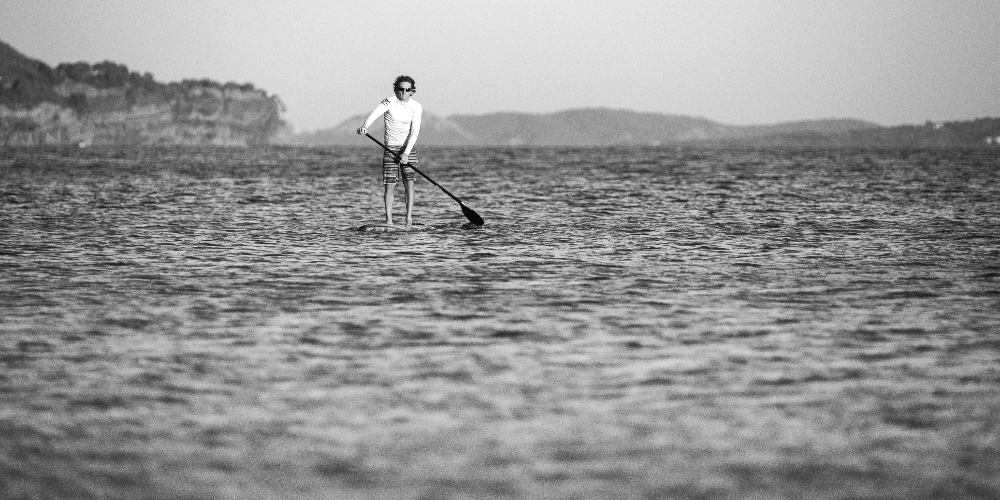
With sit-on-top kayaking, you rely mainly on your arms and shoulders to move your boat, which gives you a repetitive workout that builds strength in your upper torso. The big bonus of SUP, however, is that you use you entire body. On a stand-up paddleboard, you have to stand straight and move a single paddle across both sides of your body for propulsion. This trains your core abdominal muscles, as well as engages a range of muscles in your arms (used to propel your body weight) and legs (used to steady you on the board). Although both burn a considerable amount of calories, SUP is better at improving your overall balance and coordination.
Winner: SUP
Stability
As we mentioned before, being closer to the water and having two paddles as opposed to one makes sit-on-top kayaking a more secure option if you want to stay out of the water. Sit-on-tops are popular among beginners and people who aren’t overly confident offshore, as most of us feel more stable when sitting rather than standing on a raft. You can of course sit on a SUP but it essentially defeats the object of the sport, so if there’s a strong current or windy conditions where you want more security, go for sit-on-tops.
Winner: Sit-on-top kayaking
Transportation
SUP kits consist mainly of a single board and paddle, which makes them generally easier to move around than other boats. Sit-on-tops are often bulkier with far more storage spaces, and you’re probably taking a lot of extra gear on the boat with you than you would on a SUP before we even get to the boat itself. With a handle in the middle of the board so you can carry it at your side, SUPs are one of the easiest boats to store and carry.
Winner: SUP
Durability
If you’re on a SUP in shallow or rocky water, you have to be more careful and aware of underwater surfaces and debris that might damage or snap your SUP’s fins, which can protrude quite a bit. With sit-on-top kayaking, you have the benefit of a wider, flatter hull with no fins. Merge this with the strong ABS plastic usually used to make these types of boats, and you generally get a more stable and long-lasting product.
Winner: Sit-on-top kayaking
For beginners
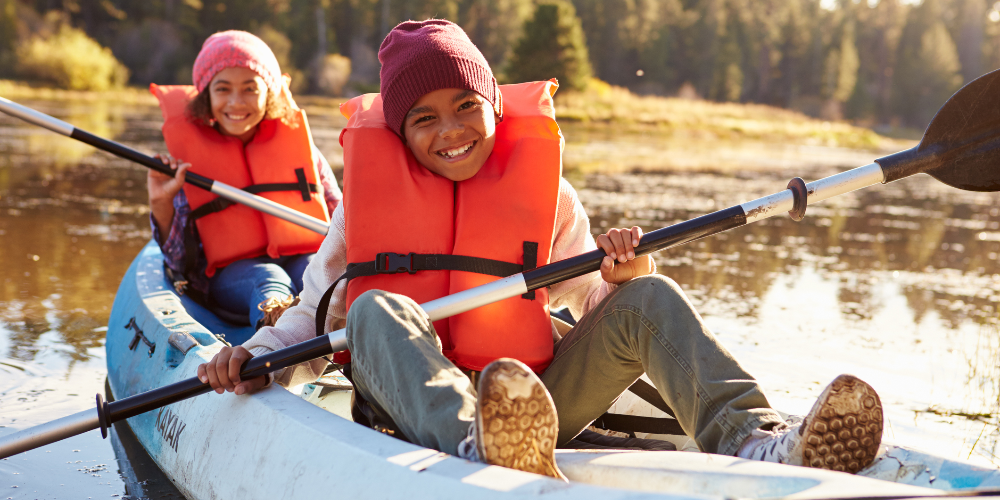
Although SUP is quite easy to pick up, the secure moulding of sit-on-tops gives inexperienced paddlers more steadiness on the water. This helps make them feel safer, build confidence and master paddle strokes, while SUPs feature open decks and a higher chance of rocking.
Winner: Sit-on-top kayaking
Long distance paddling
Both sit-on top kayaks and SUPs have their advantages in this category. If you’re on a SUP, you have the option of sitting and standing. As long as the water is reasonably calm, you can move about as you please which means you can paddle for hours without having to pull up on shore to rest. Similarly, the sit-on-top allows your legs to stay relatively still, which will prevent you getting tired quickly. However, being constantly seated might bother you after a while and you might want to stop somewhere to stretch your legs.
Winner: SUP
Taking pets!
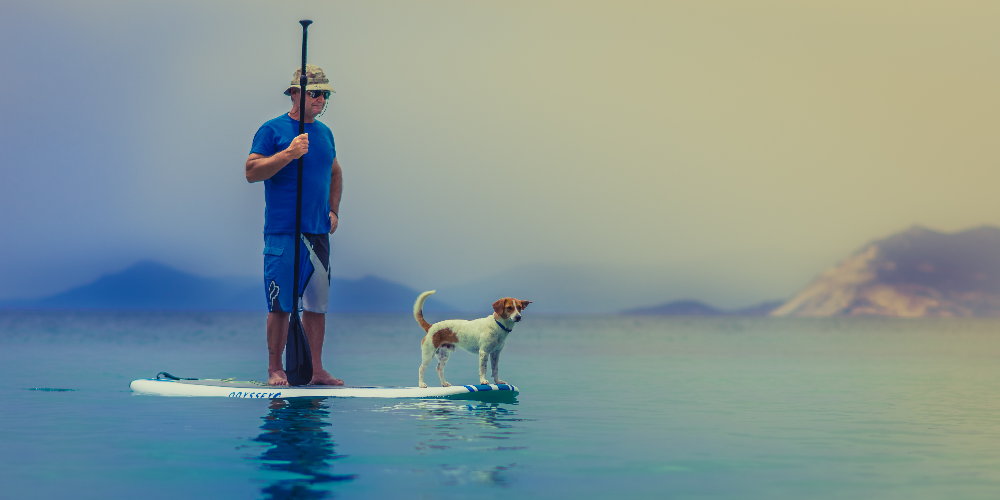
Possibly a reason for SUP’s surge in popularity is the fact that you can take you dog on the water with you. We know this is also possible in most other kayaks, but the larger-than-average deck beats the confined cockpit in our opinion. Plus, SUP decks are more capable of holding large dogs safely and comfortably, as opposed to squeezing them in a cockpit of seating them on the bow of your boat, which can impact on its balance.
Winner: SUP
Where SUP and sit-on-top kayaking tied
It wasn’t all black and white when it came to choosing winners, so here’s a few that finished a draw.
- Group or solo activity: both SUP and sit-on-top kayaks are made for single and multiple outings, whether you want to head out on the waves with friends or enjoy fishing by yourself.
- Manoeuvrability: how easy these boat types are to move depends on each design and water condition. For example; long sit-on-tops are good at tracking in a straight line, while SUPs are generally better in surf.
- Exploration: standing on a SUP, you get a great view of the coast and water which means you can spot where you want to explore quickly. However, sit-on-top kayaks give you the added storage space and stability for taking your camera along and sitting back to enjoy your new surroundings.
Check out our SUP and sit-on-top ranges for all your watersports gear.
Comments are closed here.