
How to Paddle Board [Top Tips For Beginners]
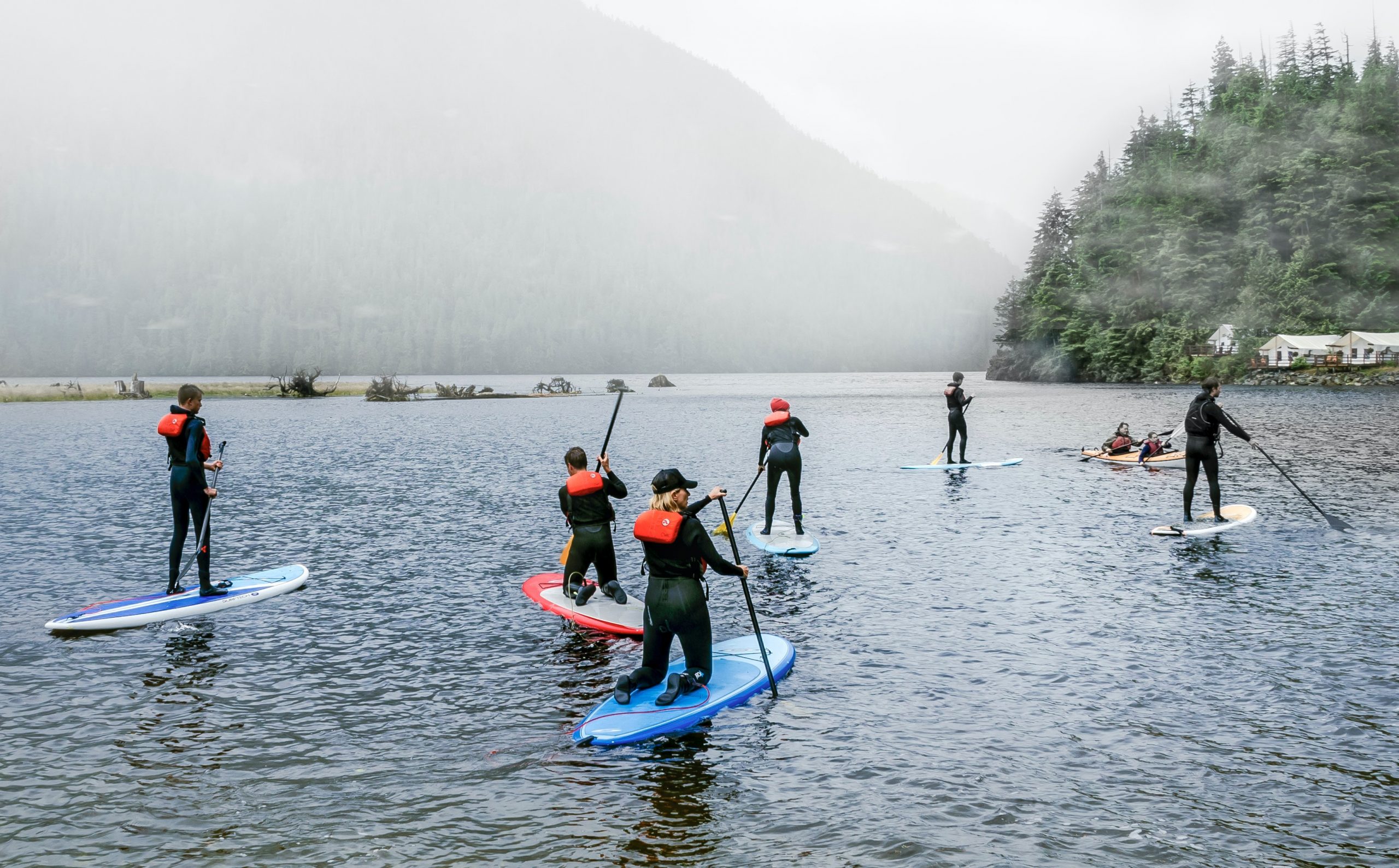
Paddle boarding is becoming increasingly popular across the UK, so there’s never been a better time to get involved. Paddle boarding is immensely fun, and it’s also a great way to work out, especially if you’re looking to strengthen your core and upper body muscles or rehabilitate knee or ankle injuries.
If you want to learn how to paddle board, just follow these tips to make the most of your time in the water!
What is paddle boarding?
Originating in Hawaii around the 1950s, this water sport is an offshoot of surfing. Using their arms while standing, lying or kneeling, paddle boarders propel themselves forward.
Stand up paddle boarding (also known as SUP boarding ) is very similar to other forms of paddleboarding, except paddlers maintain an upright stance on their boards at all times and use a paddle to propel themselves through the water. It began as a way for lifeguards to ensure a clear view of possible swimmers in trouble, paddling their way to the rescue.

Paddle boarding tips
Learn how to paddle board like a pro with our top paddle boarding tips for beginners.
- Ensure the Paddle is the Right Way Around
If you’re learning how to stand up paddle board, make sure you’re holding your paddle correctly. Most paddle sports have the scoop positioned so that it moves against the water. This helps gain speed, but it’s actually wrong for stand up paddle boarding. Instead, hold the paddle, so the scoop faces the way you’re heading. This results in a smoother stroke and places less strain on your upper body.
- Use Your Core
Actually, make that ‘don’t use your arms’. It seems as if your arms and shoulders would represent the main muscle groups needed during SUP boarding, but you’ll actually need to concentrate on using your core. These muscles are more powerful than any others your body has to offer and provide smooth, effective power. Using your arms will just see you getting exhausted in no time flat.
- Use A Leash to Tether Your Board to You
When you’re paddle boarding, always use a leash to tether yourself to your board. This is one of the most important paddle boarding tips we have. You can also easily lose a paddle board in choppy waters if it flies out from under you when you fall. And most importantly, your paddle board also doubles as a floatation device if you get tired in the water or too far from shore.
- Keep Your Eyes on the Horizon
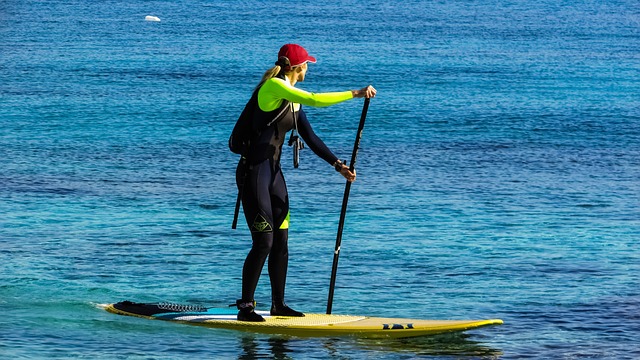
Anybody who’s ever surfed – even just for an intro lesson – should already know that you shouldn’t look down at your board. The same when learning how to paddle board. It’s tempting to look down to water level, but this will draw your whole body downwards – often until you fall straight in.
For the most reliable stability, keep your head up, your back straight, and your body weight on your toes. Pick a point on the horizon to paddle towards, and save yourself from taking an unexpected dip.
- Fall Down Correctly
Okay, you’re keeping your eyes on the horizon, you aren’t overworking your arms, and you’re using the paddle correctly. Guess what? You’re still going to fall. Of course, this is all part of the learning process – it’s not something you can entirely avoid. You can, however, learn how to fall without hurting yourself!
As you begin to lose your balance, make sure you fall as far away from the board itself as possible. You’ll be using a leash, so there’s no need to worry about losing it, but falling against the board is surprisingly painful.
Learning how to paddle board isn’t as hard as it looks, and keeping these tips in mind can make it even easier to pick up. Check out our stand up paddle boarding range here at NorthShore Watersports so you can get out there and enjoy your new hobby!
Learn how to stand up paddle board with us
Here at Tees Barrage International White Water Centre, we offer beginners the opportunity to learn how to use our stand up paddleboards. We provide two-hour introduction sessions with all equipment provided. All you’ll need to bring is something to wear under your wetsuit (swimming shorts or a swimsuit work best) and some shoes you don’t mind getting wet.
Our sessions are open to anyone aged eight years and up, and we can offer sessions for private groups such as birthday parties or those looking for a fun corporate team building activity. Please contact us for more information.
Comments are closed here.