
How to Choose a Life Jacket
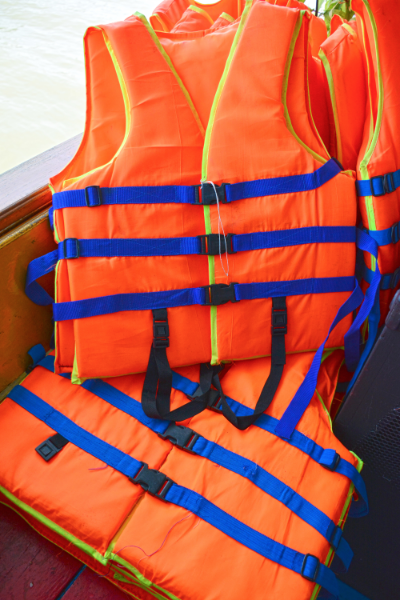
What’s the difference between a life jacket and a buoyancy aid?
Life jackets and buoyancy aids are both personal floatation devices (PFDs). The difference is, buoyancy aids are designed to help you float and reduce your fatigue in the water. A life jacket, however, offers more buoyancy and is designed to fully support you in the water, even if you’re unconscious. It will rotate you so you’re on your back and your mouth and nose are above the water.
How does a life jacket work?
The primary function of a life jacket is to keep you afloat to keep water from your airways. To do this, it will rotate you onto your back so your nose and mouth are out of the water.
Life jacket newton ratings
Life jackets have ‘Newtons ratings’ to indicate the buoyancy level of a lifejacket. The higher the number, the more buoyancy it has.
- Level 100N life jacketS
A level 100N life jacket is recommended for use in relatively calm waters only. These life jackets may not be sufficient enough in rough waters and may not be able to roll an unconscious swimmer or paddler onto their back.
- Level 150N life jacketS
Level 150N life jackets are suitable for coastal and offshore waters when the conditions are not severe. This level life jacket should be able to turn a person onto their back if they are unconscious and cannot help themselves.
- Level 275N life jackets
Level 275N life jackets provide the most buoyancy and are therefore best for offshore use and paddling or swimming in extreme conditions. They are designed to keep the person floating in such a way that their nose and mouth are above the water’s surface.
New life jackets in the UK are required by law to meet the International Standards Organisation standard ISO12402. However, bear in mind that older life jackets may have a CE mark instead, numbered from EN393 TO EN399.
What size life jacket do I need?
Most level 150N and 275N life jackets come in one size, and are suitable for all adults weighing over 6st 4oz (40kg).
However, the length of waist and chest belts can differ between brands, so it’s important to check online to find out exactly which size equates to which measurement. Remember, a ‘medium’ from one brand might be very different from that of another.
You should make sure that it fits snugly, but not enough to impair your ability to move freely or chafe you while paddling. Tighten all the straps, starting at the waist and leaving the shoulders until last. Make the same motions as you normally would to test out the jacket, remembering to wear the same clothes you would while canoeing or kayaking.

Life jacket features to look out for
Your lifejacket will be with you whenever you’re in the water; once you’ve found the right size, think about how the following features could help out.
Finding the correct size is the most important thing to do when looking for a new lifejacket, but there are plenty of other features to take into account, especially if you like to get out on the water often. Here are just a few things you might like to consider.
Tabs
Tabs are great for storing your accessories, such as knives, whistles, and backup floatation devices. Having plenty of tabs to attach such items to is great for those who like to take long trips. Remember to look at their location if you want to attach anything which you’ll need to get to quickly in an emergency.
Pockets
Pockets allow you to carry slightly larger and bulkier items, or simply those that don’t come with a clip. They might not seem important, but ask yourself whether you might like them for certain items – such as hydration units – or even just for keeping your hands warm. As with tabs, pockets are more important if you’ll be heading out for longer excursions.
Colour
Colour might seem like a purely cosmetic concern, but it’s worth keeping in mind that brighter shades will improve your visibility. Also, the way a lifejacket looks shouldn’t be something you disregard entirely. Their main purpose should always be safety, but getting one you’ll also enjoy wearing is always a plus.
Ventilation
This is a factor that many fail to take into account, but it can make a huge difference when you’re out on the water. Ask yourself where you will be going and how much effort you will be needing to exert. Warmer climates or strenuous paddling will mean that you’ll quickly become uncomfortable without adequate ventilation.
A torch
Lots of life jackets are designed with a torch or light source attached, which can help save your life in an emergency in the dark or poor weather conditions. However, if they don’t have one, you can easily purchase one separately and clip it to your vest.
Life jackets at Northshore Watersports
Ready to look at options? Browse our complete range of life jackets here at NorthShore Watersports.
Comments are closed here.