
Paddleboarding Safety Tips for Rivers and Estuaries
Paddleboarding has become increasingly popular, with seasoned paddlers and exuberant beginners taking to the water to indulge in an exhilarating and health-beneficial sport.
Whether you’re a fairly new paddler or a long-time fanatic, it’s important to brush up on paddleboarding safety tips for heading out on rivers and estuaries to enjoy the experience with full peace of mind.
Follow our safety tips for paddleboarding so you can be prepared whenever you head out on the glittering waters.
Table of Contents
- Check the weather forecast and tide times
- Check your equipment
- Dress appropriately
- Use a paddleboard safety leash
- Let someone know you’re heading out
- Choose helpful equipment
Check the weather forecast and tide times
Before heading out on your paddleboard, check the weather forecast for the rest of the day to avoid any nasty, surprise weather conditions.
Make yourself aware of wind and tide conditions and what they can feel like when you’re out on the water. It’s worth talking to other local paddlers or water sports enthusiasts with good local knowledge of the tides and currents to prepare yourself for any unforeseen water conditions.
Fast-moving water can pose an extreme risk as the strong waves require advanced strength and training to navigate the rough water back to safety. Whether you’re paddling on rivers or estuaries, even a slight wind can cause risks, so be sure to check the forecast for the whole time you plan to be on the water.
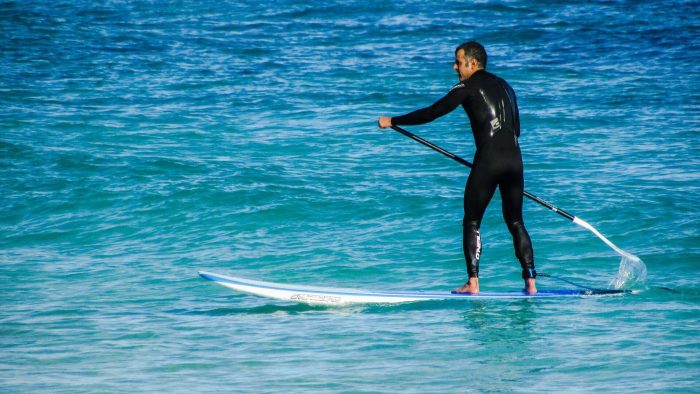
Check your equipment
Keeping your equipment in tip-top shape is one way to keep yourself safe out on the water. Be sure to check your equipment before you leave home and again at your destination to make sure it all looks in working order.
Keep inflatable stand-up paddleboards pumped up to the recommended PSI, normally between 10 and 15. Ensure your paddle is put together correctly and that your equipment suits the conditions you will be paddling in.
Dress appropriately
Dressing for the weather and water temperature you will be paddling on is essential for keeping safe, as falling in is an inevitable fate.
Choose a suitable wetsuit for paddling in cooler seasons or keeping warm during long days on the water. For warmer weather, always layer up so you can remove layers if the temperature increases. It may be warm, but the water will certainly be cooler, so ensure you have enough layers to keep you warm and protected when submerged.
Finding the right personal flotation device (PFD) or buoyancy aid will give you an advantage if you fall off your paddleboard. Choose a PFD that fits well and allows you to move your arms freely so you can paddle efficiently.
If you ever get in trouble, always remember ‘float to live’.
Use a paddleboard safety leash
Using an ankle leash when paddleboarding will help you to stay connected to your board if you get into trouble and help you to float.
Various types of leashes are available, and no one size fits all. The environment you are paddling in is the biggest indicator of what type of leash you need.
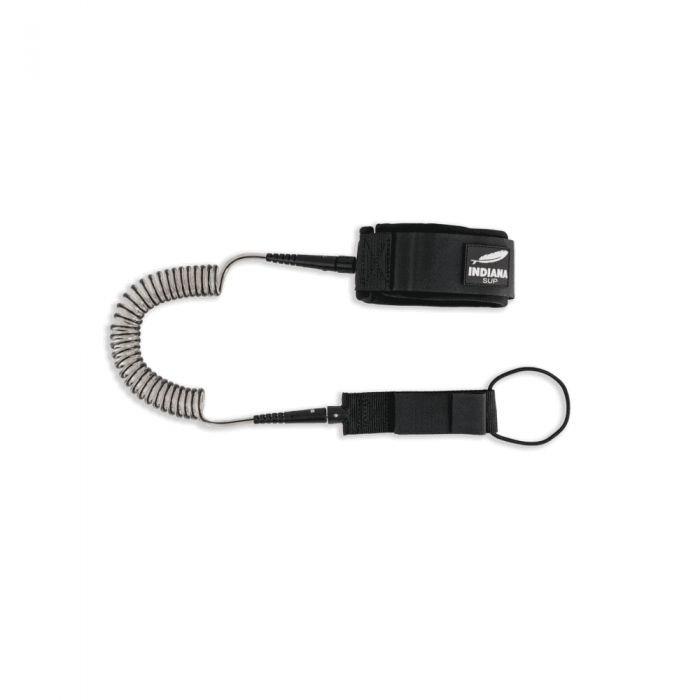
Ankle leash
Coiled leashes are like a spring, used for general paddleboarding on flat water. They are attached to the ankle and suitable for slow-moving waters with no risk of entanglement. Ankle leashes are the most common as they are easy to wear and fit.
Quick release belt
Quick release belts are suitable for moving or flowing water like rivers and estuaries where you may need to separate from your paddle or board. It can be easily reached if you come off your board which puts you in full control.
Let someone know you’re heading out
If you’re heading out on the water alone, always let a friend or family member know where and when you are planning to paddle and approximately how long you will be.
Always take a mobile phone if possible and take a waterproof pouch to keep it safe in case you need to use it in an emergency.
Choose helpful equipment
Taking the right equipment out with you when you hit the water can be crucial in keeping you safe.
Invest in some quality SUP accessories for peace of mind whenever you take to the water.
Dry bag
Keeping your belongings safe and dry is crucial when heading out on the water. Using a dry bag will keep phones and other essentials safe from inevitable splashes making it an essential piece of equipment to add to your collection.
Rescue whistle
Rescue whistles are a priority for being out on the water as you can use them to warn and communicate with others. You can alert other watersports enthusiasts to your presence or attract attention if you need help.
SUP fins
Fins are available in two sizes, adding stability to your paddle board.
Larger fins have longer front edges and wider bases, offering more stability than smaller fins. Smaller fins still offer increased stability but also increase the board’s manoeuvrability.
Staying safe on the water
Staying safe on the water makes it a more enjoyable experience.
Make sure you check the weather and have suitable paddleboard safety equipment and accessories to enhance your time on the water, taking in the stunning coastlines and breathing in new experiences.
Planning your next adventure? Find a new stand-up paddle board and all the accessories for your next adventure.
Comments are closed here.